RAM Prices Are Climbing. TeamGroup Warns the Shortage Could Last Into 2028
A RAM upgrade used to be the relatively painless part of a PC shopping list. The latest warning from TeamGroup suggests that buyers should not count on memory becoming cheap again just because the calendar changes.
Gerry Chen, the memory-module maker's CEO, expects the worst of the shortage to stretch through the end of the second quarter of 2027. Supply and demand may not balance until the second half of 2028 at the earliest, according to BigGo Finance's account of the company's November 2 earnings call, reported by Fortune on November 10.
That is an industry executive's forecast, not an expiry date printed on the shortage. But it is a useful explanation for why waiting for a routine price dip may not work as it did in an easier market.
The AI buildout reaches the PC parts aisle
The connection is less mysterious than it sounds. Chen says AI servers and enterprise customers are absorbing much of the available DRAM output, while major manufacturers prioritize high-bandwidth memory and higher-end DDR5. Consumer products are competing for supply with customers buying memory at data-center scale.
Nikkei Asia separately reported in early November that DRAM prices were roughly twice their level at the end of 2025, as suppliers favored AI applications over general-use products such as PCs.
Do not read that as a promise that every RAM kit at every retailer has doubled. Component markets, contract prices and the price of a finished kit are different measures. Capacity, specification, stock already in the channel and the retailer's own pricing all matter when you are comparing an actual upgrade.
An uncomfortable forecast, from a company benefiting from it
TeamGroup is not watching this from the sidelines. Fortune and BigGo report record quarterly results and a bigger share of business coming from enterprise and industrial customers. Higher prices hurt buyers, but they can help a supplier's margins.
That commercial position is worth keeping in mind. Chen's warning is informed by the supply chain his company buys from, but it is not an independent guarantee of where prices will land. A forecast extending into 2028 can change with demand, production and investment.
Nor does a new module-production facility automatically mean new DRAM chip supply. BigGo describes TeamGroup expanding its own production capacity; that should not be confused with instantly replacing the chipmaking capacity being pulled toward AI.
What a PC buyer can actually do with this
The useful takeaway is not "buy anything before it disappears." It is to price the memory part of a build seriously, rather than treating it as the cheap item you can sort out later.
Compare equivalent kits, check what your motherboard supports and decide whether you actually need more capacity now. If your current machine is doing its job, a supplier's gloomy forecast is not a reason on its own to panic-buy an upgrade. If you do need a new PC, the memory squeeze belongs in the budget discussion alongside the CPU and graphics card.
Sources
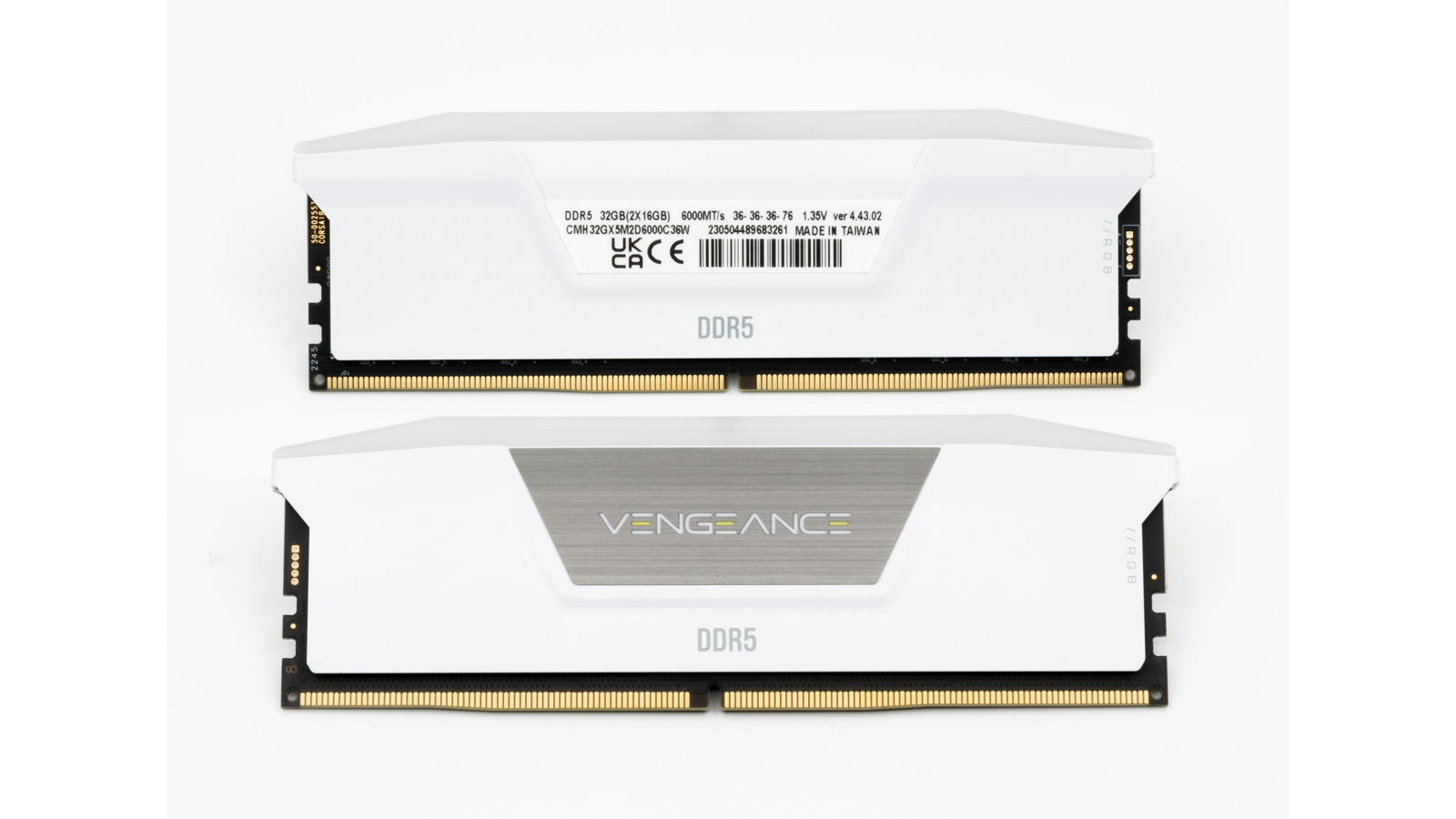
Photo: Corsair DDR5 memory modules, an illustration rather than a TeamGroup product test. Jacek Halicki / Wikimedia Commons, CC BY-SA 4.0. Resized and placed on a white background; this adapted image is available under the same license.