Anki: Remember More Than You Reread
- Learning
- Flashcards
- Open source
Rereading a page can feel wonderfully productive. The words look familiar, the highlighter has done excellent work, and your brain gives a confident little nod. Then someone asks a question without the page in front of you. Silence. Apparently familiarity was doing most of the heavy lifting.
Anki is a flashcard program built around recalling information and reviewing it over time. The desktop application is free and open source. It is useful for things you need to remember, provided you resist the temptation to turn every paragraph you encounter into another assignment.
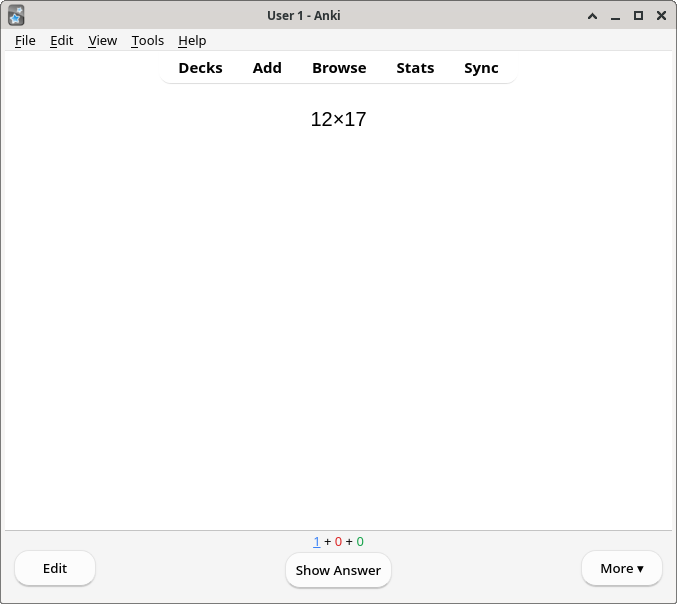
Anki 23.12 showing the question side of a flashcard. Source: Wikimedia Commons.
A question, a pause, then an answer
The basic loop is simple. A card shows a question. You try to answer before revealing the other side. Then you tell Anki how well you remembered it, and the program schedules another review.
That pause is the point. Reading both sides immediately turns a recall exercise back into browsing. The aim is not to make the answer look familiar again; it is to find out whether you can produce it without a prompt.
Anki's manual explains active recall and spaced repetition as the ideas behind this process. There is no need to promise instant mastery or attach a miraculous percentage to your future exam score. The useful promise is smaller: a system for returning to material instead of relying on your memory to remind you what you have forgotten.
Make your first deck pleasantly small
Choose one subject you are already learning and create a few cards from it. A term and its meaning, a short factual question, or a detail you repeatedly confuse can work. Keep the question specific enough that you will know what counts as a correct answer.
A card asking for an entire chapter invites vague self-marking. Splitting that material into focused questions is usually easier to review. Keep enough context to make the question meaningful, but do not require yourself to recite a small essay to earn a passing grade.
The built-in Basic note type provides front and back fields. Other types can create reversed cards, typed answers or missing-word exercises. Start with the simple type until you understand the review loop. Designing a beautiful template is optional; knowing the answer is rather less optional.
Notes and cards are not quite the same
Anki distinguishes the information you enter, called a note, from the cards it generates. One vocabulary note can produce one card asking for recognition and another asking you to produce the word in the opposite direction.
This helps keep related information together. Correct a mistake in the underlying note and the related cards use the correction. It also explains why adding a handful of notes can produce more cards than you expected.
Be selective about reversed cards. Recognizing a foreign word and producing it from a translation are different tasks, and both may be valuable. That does not mean every fact benefits from being asked backwards. “What is the capital?” is useful; a badly phrased reverse question may have several equally reasonable answers.
Do not import a mountain and call it a habit
Shared decks can save time, especially when they match a course or reference you already use. They can also leave out the explanation their creator already understood. The manual warns against using memorized facts as a replacement for understanding a complex subject.
Preview a deck before committing to its workload. Check accuracy, wording and how much new material it introduces. A huge collection is not automatically a better collection, and errors in a shared deck do not become true because you have reviewed them efficiently.
Keep daily additions manageable and rate your recall honestly. If you needed to peek, that is useful feedback rather than a personal defeat. The review system needs your actual performance, not the performance you would like it to report.
Free on the computer, with mobile distinctions
The free desktop application and AnkiWeb synchronization are separate from the paid AnkiMobile app for iPhone and iPad. Android's AnkiDroid is developed by a separate team. Use links from the official ecosystem rather than assuming every similarly named flashcard app is the same product.
Anki suits vocabulary, course details and other information that benefits from repeated recall. It will not replace reading, practice, conversation or understanding. I would begin with a small deck you wrote yourself and a routine you can sustain. A dozen useful questions beat a digital warehouse you are afraid to open.
See the official background explanation, getting-started guide and AnkiMobile pricing explanation.