Plux: Plan Group Trips Without the Spreadsheet
- Travel
- Productivity
- Open Source
Every group trip I have ever organized died the same death: a spreadsheet called "trip FINAL v3 ACTUALFINAL.xlsx", a chat thread where somebody asks "wait, who paid for the train?" four times, and one friend who never reads either. The tools built to fix this usually want a subscription before they show you a second screen.
Plux takes the opposite approach. It is a free, open-source trip planner that runs in your browser (and on Android), built by a solo developer who was apparently as tired of spreadsheets and subscription apps as the rest of us. No account wall on the way in: you land on the planner and start building.
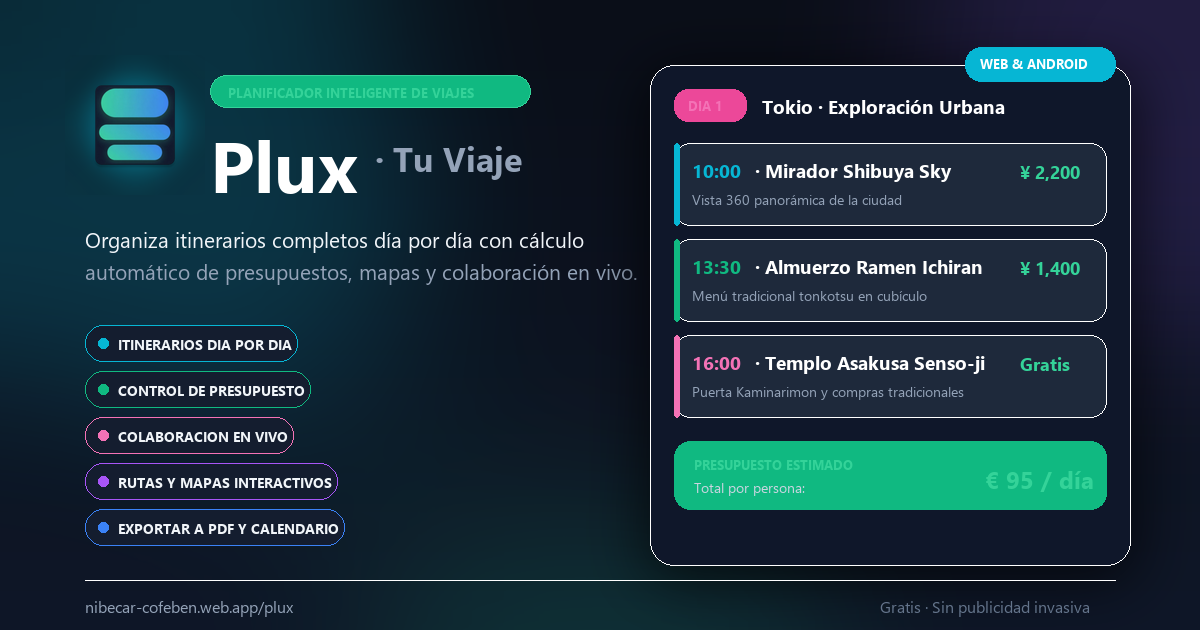
Plux's day-by-day itinerary view, with times, prices and a per-person budget. Official banner: plux.nibecarcofeben.com.
The trip, day by day
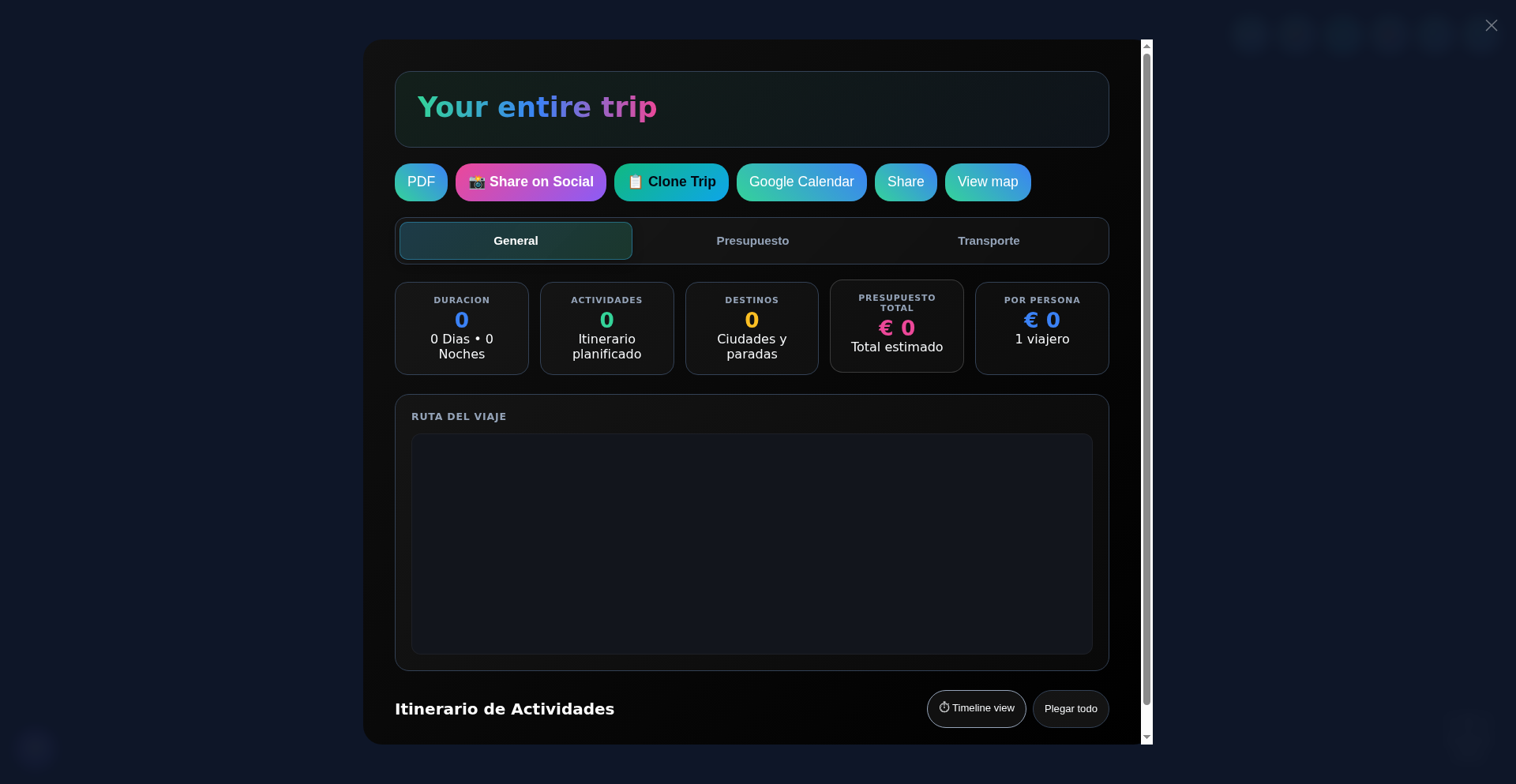
The core of Plux is a timeline: you set a departure place, dates and travelers, then stack activities day by day with times, descriptions and costs. Around that core sits the practical stuff spreadsheets never quite handled. A budget view computes the total and the per-person share automatically, in multiple currencies. An expense-splitting panel tracks who actually paid what and who still owes whom. There is a transport search for the legs between stops, interactive route maps, and an instant phrase translator with pronunciation for when the group lands somewhere without a shared language.
When the plan is done, it leaves the app gracefully: export to PDF, push it to Google Calendar, clone a trip as a template, or share it with the group. Everything saves automatically as you go, which is the correct default for anything built by humans with flaky airport wifi.
A weekend escape in Plux looks like this: Friday's train and hotel check-in on day one, Saturday's museum, ramen stop and evening viewpoint on day two, each with its time and price. The budget panel keeps a running per-person total while you dream, which is a polite way of finding out the viewpoint bar costs more than the museum before you are standing in it. That is the intended flow from the live app, not a trip I have already taken with it.
The collaboration side is the part that would have saved my last group trip: everyone works on the same plan live, and the balance sheet of who-paid-what is always one tab away instead of buried in a chat search.
The honest fine print
Plux is very young. The GitHub repository had exactly one star when I found it, which means you are early, and "early" in software means the same thing it means in travel: pack patience. The interface is also primarily Spanish right now (it is an Argentinian project), with bits of English mixed in; perfectly usable if you read Spanish, a small adventure if you do not. And it is a web app at heart, so there is nothing to install on a laptop beyond a browser tab.
What you get in exchange is genuinely unusual for this category: free means free. The site promises no invasive ads, the code is MIT-licensed, and there is no premium tier hiding the export button. The developer pays for this with, as far as I can tell, spite toward subscription apps. Respect.
Verdict
If your next group trip is currently living in a spreadsheet and a chaotic chat thread, Plux is worth the ten minutes it takes to rebuild the plan in a tool actually shaped like a trip. Solo travelers get the itinerary, budget and maps; groups get the expense splitting that prevents the traditional post-trip awkwardness. Keep an eye on the project: the bones are good, and at this stage every star and bug report genuinely matters.